
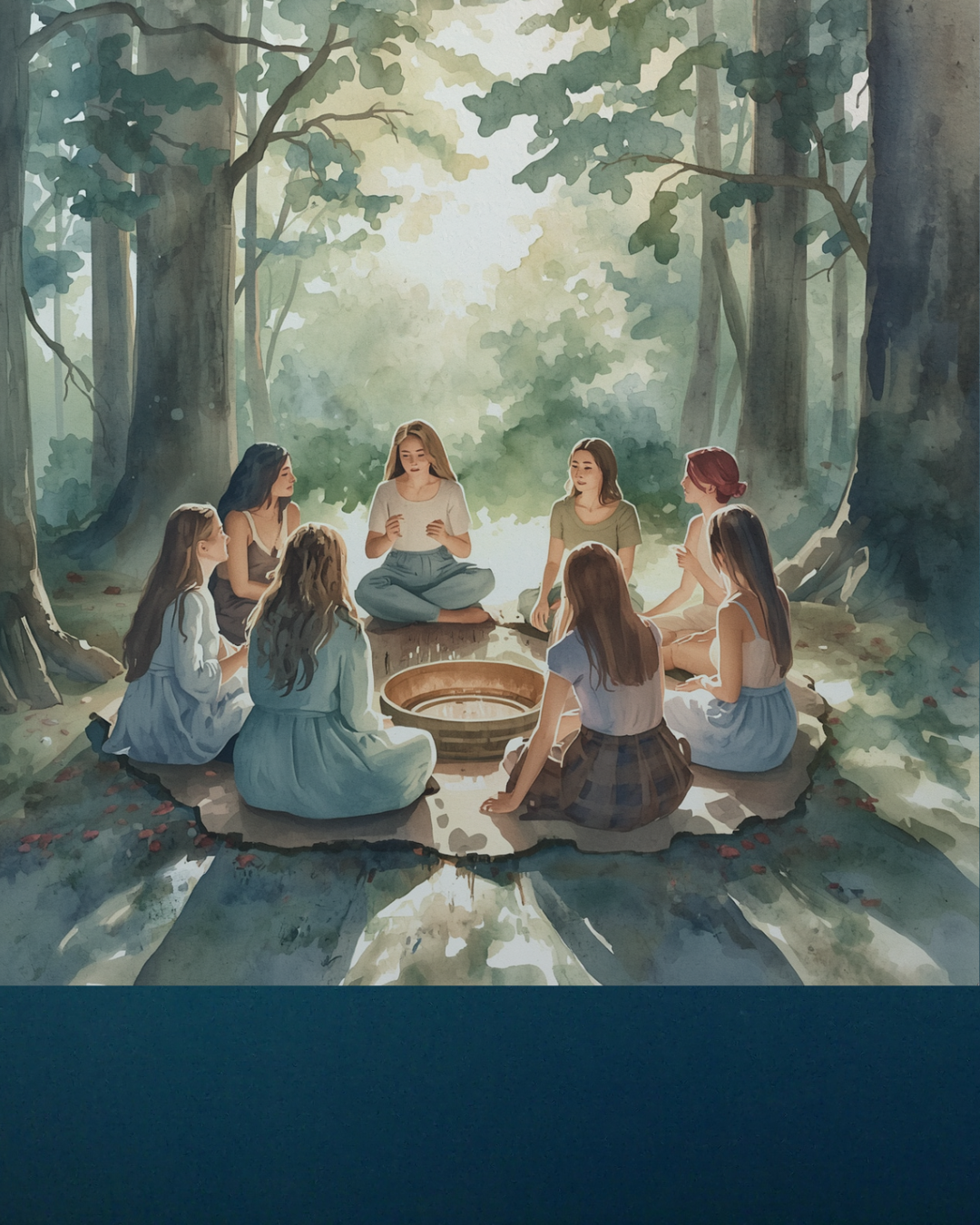
Across Cultures — What we can learn about perimenopause from tradition
Peri-Menopause Across Cultures — and What Nature Offers Us
It's so interesting to compare women living today with women in remote and historical cultures and their experience of perimenopause. Research suggests that women in modern Western societies are far more likely to experience significant symptoms than women in traditional cultures. So what are we doing differently, and what can we learn?
Cultures around the world have long approached this transition with wisdom, ritual and acceptance — and there is so much we can draw from them today.
In Japan, the menopausal transition is known as Konenki, meaning "the renewal years" or "turning point of life energy." Japanese women also report significantly lower rates of hot flushes than Western women, which researchers have partly attributed to a diet rich in phytoestrogens from soy and flaxseeds, as well as a cultural framing of menopause as a quiet, natural turning point rather than a medical event to be managed.
In many Aboriginal Australian cultures, the change of life brings an elevation in social standing. Women are regarded as holders of wisdom and are given greater respect and authority within their communities. This shift in identity — from one life stage to the next — is honoured rather than mourned. Similarly, among the Maasai of East Africa, the menopausal transition is marked through ceremony and ritual that celebrates a woman's new status and sanctifies her changing reproductive role. She steps into elderhood with recognition, not invisibility.
In traditional Chinese culture, menopause has long been understood through the lens of Jing — our vital essence — and is viewed as an opportunity to conserve and redirect that energy inward for greater wisdom, longevity and spiritual depth. Rather than loss, it is reframed as a gathering of inner resources.
Research among Mayan women in Mexico found that many did not report the symptoms commonly associated with menopause in Western cultures. Anthropologists have suggested this is connected to the respected role older women hold in Mayan society, as well as traditional diet and lifestyle factors. When a woman looks forward to what comes next, her body often reflects that ease.
What these cultures share is a holistic, supported approach — an understanding that how a woman moves through this transition is shaped not just by her hormones, but by her community, her sense of purpose, her nourishment and her relationship with her own body.
If you are wondering what perimenopause actually is, when it starts, what symptoms to expect and why they vary so much from woman to woman, I have covered all of that in depth in my earlier article — Perimenopause and Menopause: Your Questions Answered. Here I want to focus on the approach.
Adrenal and Stress Support
One of the most overlooked factors in perimenopause is the role of the adrenal glands. As ovarian hormone production begins to shift, the adrenal glands are called upon to support oestrogen and progesterone levels. In women who are chronically stressed or running on empty, this adrenal reserve is already depleted — making symptoms significantly worse. Supporting your nervous system and adrenal health through this transition is not optional, it is foundational. This may include specific nutrients such as B vitamins and magnesium, adaptogenic herbs, and meaningful lifestyle changes to reduce and manage stress.
Herbal Medicine
The herbal medicine I use today draws deeply on traditional knowledge from cultures around the world, refined over hundreds of years and now supported by modern research. Herbs such as Black Cohosh, Sage, Ashwagandha, Shatavari and Vitex have well-documented roles in supporting hormonal balance, easing hot flushes, calming the nervous system and improving mood. Herbal medicine is highly individual — what works beautifully for one woman may not be the right fit for another, which is why a personalised prescription matters.
Diet and Nutrition
What we eat has a profound influence on how we experience perimenopause. A healthy whole food diet offers us the nutrition support we need while not burdening body with inflammation producing ingredients . Prioritising protein helps maintain muscle mass and blood sugar stability, both of which become increasingly important through this transition. Reducing processed foods, refined sugar and alcohol can make a meaningful difference to symptoms including hot flushes, mood changes and energy levels. An anti-inflammatory way of eating also supports long-term bone and cardiovascular health.
Sleep Support
Poor sleep is one of the most commonly reported and most debilitating symptoms of perimenopause. Disrupted sleep affects mood, cognition, metabolism and resilience — and can quickly become a cycle that's difficult to break. From a naturopathic perspective, addressing sleep means looking at what's driving the disruption. Is it night sweats, anxiety, cortisol dysregulation or progesterone decline? Targeted herbal and nutritional support, combined with good sleep hygiene practices, can restore restful sleep without reliance on medications.
Exercise and Lifestyle
Movement is medicine at every stage of life, and particularly so during perimenopause. Strength training supports bone density and muscle mass, both of which decline with falling oestrogen. Regular movement also supports mood, insulin sensitivity and cardiovascular health. Alongside exercise, practices that support your nervous system — such as yoga, breathwork, time in nature or simply slowing down — are equally important. This is a time to listen to your body, not push through it.
You Don't Have to Navigate This Alone
The cultures that have managed this transition most gracefully have one thing in common — women were supported. Whether through community, ceremony or traditional healers, they were not left to figure it out on their own.
If you are navigating perimenopause and would like personalised, natural support, I would love to help. You can book a consultation — I look forward to working with you.
Sign up to our newsletter
Recent Posts
- Unlocking Detox Pathways: The 4 Stages of Liver Cleansing & Foods That Help
- Perimenopause & Menopause: Your Questions Answered
- Healthy Glowing Skin: The Connection Between Your Lymphatic System and Skin Health
- Winter to Spring: Understanding the Seasonal Shifts in Your Metabolism
- Endocrine disruptors – Hormone changing chemicals that are more prolific than you think